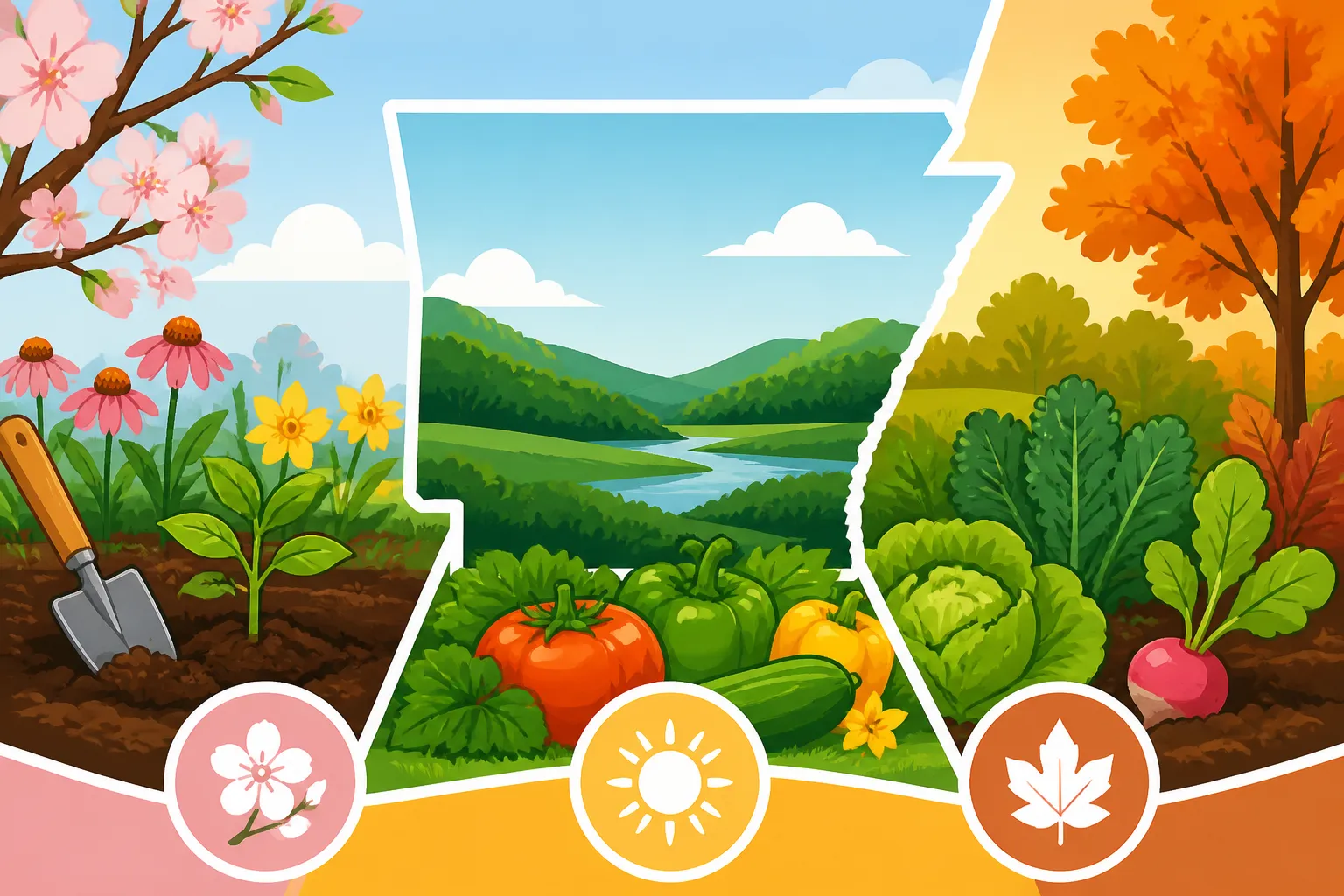
Arkansas Seasonal Planting: Spring, Warm-Season, and Fall Timing
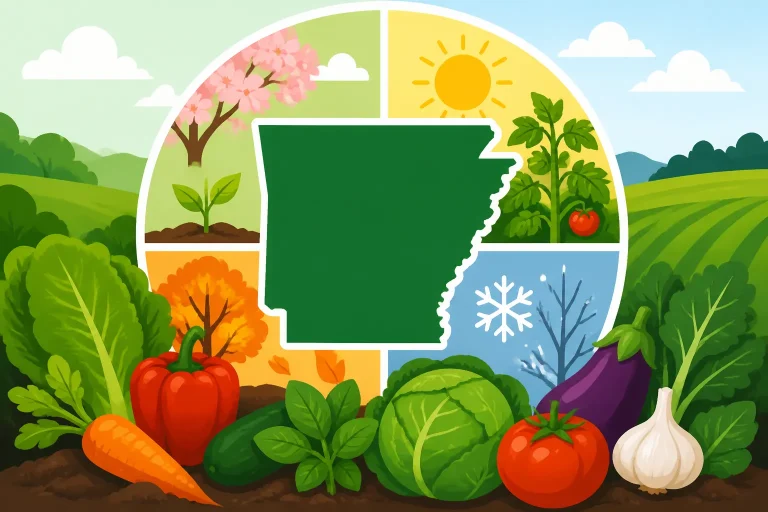
Arkansas gardeners often want a planting date they can circle on the calendar, but a single statewide date can mislead. Spring, warm-season, and fall crops respond to different conditions, and local weather can shift the useful window. The practical approach is to match each crop’s needs with your garden’s conditions and the harvest period you want.
Start with the crop and the conditions
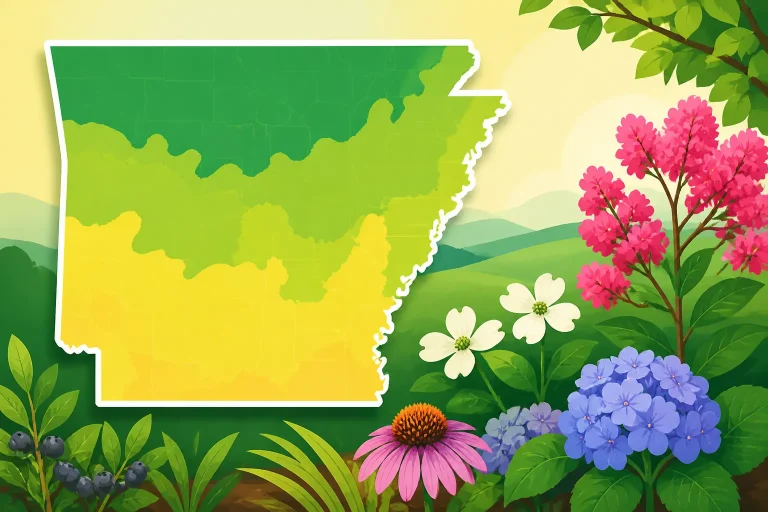
A planting calendar is most useful as a set of seasonal windows, not a promise that every garden is ready on the same day. In Arkansas, location, elevation, exposure, soil drainage, and a garden’s nearby buildings or trees can all affect how quickly a bed warms or how long it stays cool. A south-facing raised bed may be ready before a shaded patch of heavy soil nearby.
Begin by sorting the crops you want to grow into broad groups:
| Planting group | Main timing question | What to check before planting |
|---|---|---|
| Cool-season vegetables | Can the crop mature while temperatures are suitable? | Expected maturity period, current conditions, and the season ahead |
| Warm-season vegetables | Has the garden become suitable for tender growth? | Soil warmth, forecast conditions, and exposure to cold |
| Fall vegetables | Is there enough suitable growing weather left for the crop to mature? | Days to maturity on the packet and the expected arrival of cooler weather |
| Cool-season annual flowers | Is the bed suited to fall or late-winter planting? | Local conditions, drainage, and the planting directions |
According to the University of Arkansas System Division of Agriculture Cooperative Extension Service, cool-season vegetables should be planted early enough to mature before hot weather or late enough to mature in the cooler fall months. That makes the expected harvest window just as important as the day the seed or transplant goes into the ground.
Use the information on a seed packet or plant tag to help judge whether a crop fits the season you have in mind. Check the listed maturity period and whether the instructions assume direct sowing or transplanting. Those details help you work backward from the time you hope to harvest, instead of choosing a sowing date without considering what comes next.
Weather still matters. A calendar can describe a typical window, but it cannot tell you whether a cold spell, wet stretch, or early hot period will affect your particular bed. For more background on local conditions, see Adjusting Arkansas Planting Dates by Local Elevation and Microclimate and How to Find Vegetable Planting Dates for Your Arkansas County.
Spring planting: make use of cool conditions
Spring is not one continuous planting window. Cool-season crops can use conditions that may become less suitable as hot weather approaches, while tender crops need a different set of conditions before they establish well. Treating all vegetables as if they have the same spring start can lead to poor germination, slow growth, or a harvest that arrives after the crop’s best season.
For spring cool-season crops, start with the time the crop needs to mature. Lettuce and radishes are familiar examples, but the same planning principle applies to other cool-season vegetables: aim for conditions that let the crop develop before heat becomes a problem. A packet’s maturity information, the condition of your soil, and the local forecast help you decide whether planting now matches the crop’s needs.
Cool soil or persistently wet ground can make a bed difficult to work and may delay a planting plan. If soil clumps heavily when handled, wait until it is workable rather than forcing a sowing into a compacted bed. In a well-drained, sunny location, conditions may become suitable sooner than in a shaded or low-lying spot. Check the bed itself rather than relying only on a calendar.
Cold exposure is another reason to separate crop groups. A cool-season crop and a tender warm-season transplant do not respond to the same conditions. Before moving a tender plant outdoors, consider the forecast and the risk of a temperature drop. Covering a plant may offer some protection in certain situations, but a cover does not make every planting window safe. For more on the difference between kinds of cold exposure, see How Light Frost and Hard Freezes Differ Across Arkansas.
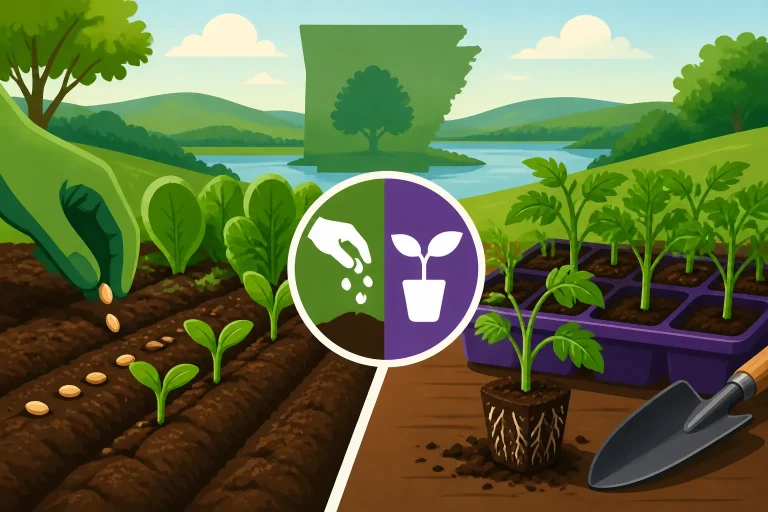
Starting seeds indoors can help gardeners prepare transplants, but it does not remove the need to wait for suitable outdoor conditions. A plant that has grown under protected indoor conditions may need a gradual transition to outdoor light and weather. Follow the crop’s sowing and transplant directions, and avoid leaving tender plants outside simply because they are large enough to move. Direct Sowing vs Transplants: Choosing the Right Start for Crops explains how to decide between sowing directly and setting out a transplant.
Cool-season annual flowers also fit into a seasonal plan. According to the University of Arkansas System Division of Agriculture Cooperative Extension Service, pansies, violas, lettuce, and radishes are cool-season annuals with planting dates in fall or late winter. For flower beds, think about the site as well as the calendar: drainage, sunlight, and the condition of the soil can affect how well new plants settle in. The relevant timing depends on the planting season and local conditions, so check current local guidance before choosing a date.
If spring planting slips later than intended, do not assume every crop is lost as an option. Some crops may still fit if they can mature before hot weather, while others may be better saved for a fall planting. Compare the remaining growing conditions with the crop’s maturity information. Arkansas Vegetable Sowing Calendar: Spring and Fall Planting offers a seasonal overview to help make that comparison.
Warm-season planting: wait for the bed to be ready
Warm-season crops are a different decision from spring greens. Tender plants generally need favorable outdoor conditions to establish and grow. A warm afternoon does not guarantee that the soil, overnight conditions, and upcoming forecast are suitable. Waiting for the bed to warm and for cold risk to ease can be more useful than planting on the first pleasant day.
Tomatoes, peppers, cucumbers, squash, beans, and okra are common examples of crops gardeners treat as warm-season vegetables. The right approach varies by crop and by whether you are sowing seed or transplanting. A seed packet or transplant tag provides crop-specific instructions; use that guidance rather than assuming that all warm-season crops should be planted at once.
Check the garden’s actual conditions. A sunny, well-drained bed can warm more quickly than shaded ground or soil that remains wet. Raised beds may also respond differently from an in-ground garden. These differences are useful when planning, but they do not replace attention to the forecast. A bed that seems ready during the day can still be exposed to an unfavorable cold night.
If you start plants indoors, prepare them for outdoor conditions rather than moving them abruptly from a protected environment into full sun and wind. Follow the plant’s directions for hardening off and transplanting. When setting out transplants, handle roots gently and give plants time to settle before judging whether they are growing well. Direct-sown crops have different needs: seeds require appropriate soil conditions and steady attention to moisture while they establish.
Warm-season plants also need enough growing time to produce before conditions change again. Consider the maturity information for the crop and the length of the season remaining. If the planting is delayed, a shorter-maturing crop or a different seasonal choice may be more practical than expecting a late planting to follow the same schedule as an early one.
Avoid using one crop’s success as proof that the entire garden is ready. A transplant in a sheltered spot may thrive while a seed row in cooler soil struggles. Similarly, an exposed container can warm and dry differently from a bed. Record what works in each location, including planting method and how the weather affected establishment. Those notes can help refine your timing for the same site in a future season.
For crop-specific scheduling, see Warm-Season Sowing Windows for Tender Crops Across Arkansas. If you are focused on a particular vegetable, the site’s planting articles can help you compare the needs of that crop with the general seasonal approach.
Fall planting: plan backward from the harvest
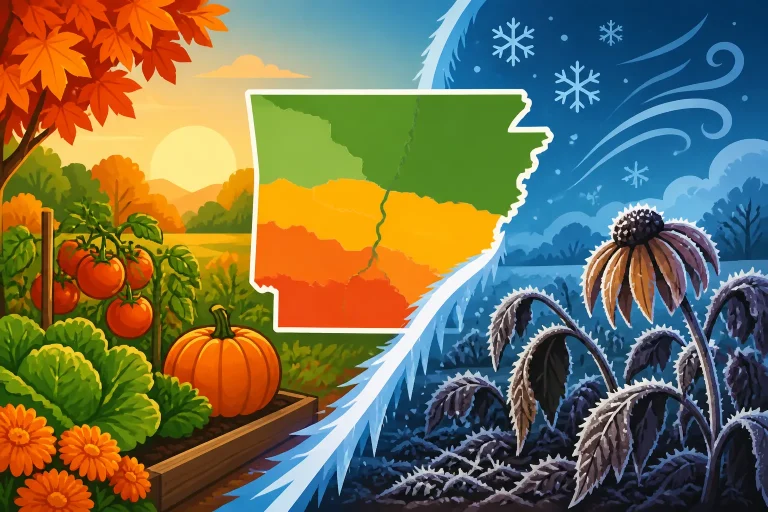
Fall planting often gets squeezed between summer heat and the arrival of cooler weather. The useful window depends on the crop’s maturity period, the date you can plant, and how much suitable growing weather remains. A crop that matures quickly may fit where a slower crop does not, but the seed packet or plant tag is the place to check the crop’s specific timing.
Work backward from the harvest you want. First, identify the crop and its maturity information. Then consider when you can sow or transplant, and whether the plant will have enough time to develop before the season becomes too cool. If the plan depends on a late planting, choose crops only after checking their stated maturity needs. Do not assume that all fall vegetables can be planted as late as one another.
Heat can complicate the start of a fall garden. A seedling may be planted with plenty of season remaining but still struggle if the bed is hot, dry, or exposed to strong sun. Prepare the bed, maintain suitable moisture, and pay attention to the conditions at the planting site. If seedlings need protection from intense sun, consider practical site adjustments such as temporary shade while following the crop’s care instructions. Using Shade Cloth to Shield Fall Seedlings from Late Summer Sun covers that specific issue.
The choice between direct sowing and transplants can matter in fall. Direct-sown seeds need conditions suitable for germination and early growth. Transplants may give a crop a head start, but they need to be in good condition and handled carefully when moved. Use crop-specific instructions to decide which method is appropriate rather than treating one method as universally faster or more dependable. See Direct Sowing vs Transplants: Choosing the Right Start for Crops when weighing the options.
A fall planting plan can also follow a spring crop. Once an earlier crop is harvested, clear plant debris, remove weeds, and assess whether the soil needs attention before replanting. Avoid leaving a bed empty simply because the first crop has finished if another crop fits the remaining season. At the same time, do not plant automatically: a new crop should match the conditions and the time left to mature.
Keep the fall plan flexible. If summer heat persists, delay sowing or protect young plants as appropriate. If a crop is already behind its expected schedule, compare its remaining needs with the weather ahead. A change in plan—choosing a faster crop, using a suitable transplant, or leaving a bed for another use—can be better than relying on a calendar entry that no longer matches conditions. For more focused planning, see When to Plant Cool-Season Crops and Fall Greens in Arkansas and Planning a Second Harvest With Arkansas Fall Vegetables.
Build a calendar that works for your garden
A useful home calendar combines crop information with observations from the planting site. It does not need to predict the weather. Its job is to help you make a better decision when a seasonal window is approaching and to keep a record of what happened.
Start with the vegetables and flowers you actually want to grow. For each one, note whether it is cool-season or warm-season, whether you plan to sow it directly or transplant it, and the maturity information on the packet or tag. Add the bed or container where it will grow. This turns a general planting chart into a plan that reflects the realities of your space.
Next, note the conditions that could change the timing. A garden with wet, heavy soil may become workable later than a raised bed. A shaded bed may stay cool longer, while an exposed container may warm and dry quickly. Low spots and sheltered areas can also experience different conditions from nearby open ground. These observations are more useful when recorded over time than when guessed from a broad regional calendar.
Use a simple entry for each planting:
- Crop and variety, if specified on the packet or tag
- Whether it is a direct sowing or a transplant
- The bed, container, or location
- The maturity information supplied with the seed or plant
- Weather or soil conditions when planted
- Germination, establishment, and harvest observations
A record like this helps explain why a planting succeeded or struggled. If a crop was planted when the garden was wet and stayed slow to establish, that matters for the next plan. If a particular sunny bed dried out quickly, that is a reminder to check moisture there more closely. Notes do not have to be elaborate; they just need to help you compare your own results from season to season.
Use local planting resources as a starting point, then check the details against your site and the crop’s instructions. A county-oriented calendar can be useful for broad timing, but its recommendations cannot account for every yard, slope, bed, or sheltered corner. Arkansas Year-Round Planting Calendar and Crop Maturity Days can provide a wider seasonal view, while Managing Seasonal Freeze Dates for Arkansas Vegetable Gardens explains why freeze risk belongs in planting decisions.
Finally, review the plan as the season changes. A late cold spell, extended heat, or delayed harvest may shift what makes sense next. Recheck crop maturity information before filling an empty bed, and do not treat a missed window as a reason to plant a crop that no longer fits. The strongest calendar is flexible: it gives you a direction, but leaves room to respond to actual weather and garden conditions.
Frequently Asked Questions
Is there one planting date that works across Arkansas?
No single date accounts for every crop and garden location. Use seasonal windows, crop-specific instructions, local conditions, and the forecast to decide when a planting is appropriate.
Can I plant cool-season vegetables in spring and fall?
Yes, if the timing gives the crop suitable growing conditions. Consider how long the crop takes to mature and whether hot or cooler weather is approaching.
Should I move warm-season transplants outdoors as soon as days feel warm?
Not based on daytime warmth alone. Check the soil, upcoming weather, and the plant’s directions before transplanting.
What should I do if I miss a planting window?
Check whether another crop or a later seasonal window fits the conditions still available. Compare the crop’s maturity needs with the time and weather remaining rather than planting automatically.
Sources
- University of Arkansas System Division of Agriculture Cooperative Extension Service (checked November 15, 2026)
- University of Arkansas System Division of Agriculture Cooperative Extension Service (checked November 15, 2026)
Disclaimer
This article is for general informational purposes only and does not constitute professional advice. Laws, prices and regulations vary by location and change over time. Consult a qualified professional for guidance on your specific situation. Arkansas Gardening Guide is not a government agency and is not affiliated with any university extension, state department of agriculture or other government agency.