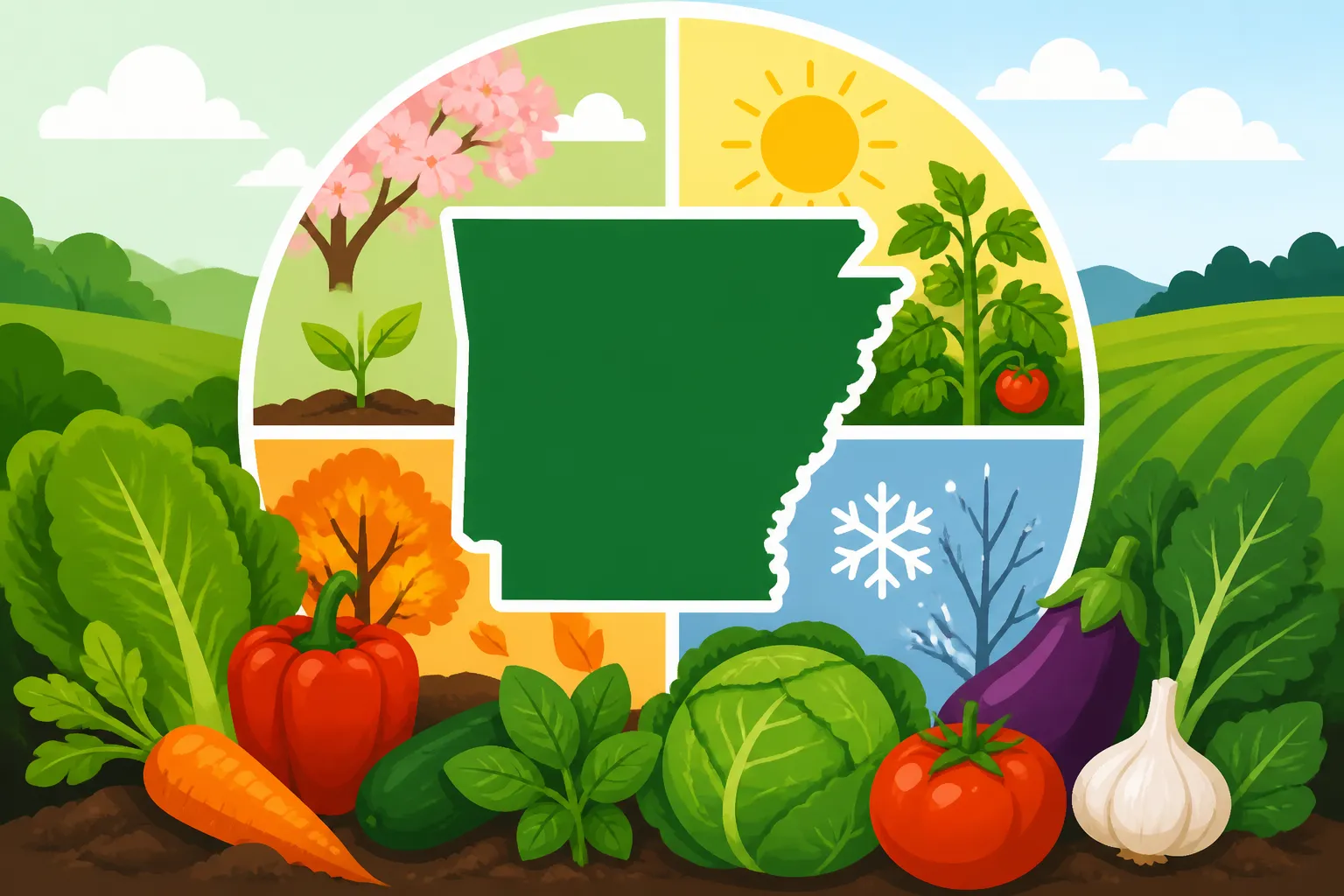
Arkansas Year-Round Planting Calendar and Crop Maturity Days
Planning a garden in Arkansas means balancing a long growing season with spring cold snaps, intense summer heat, and different conditions from north to south. A calendar can help you choose what to plant, but it works best when paired with local weather, crop maturity estimates, and your garden’s growing conditions. Here’s how to plan for harvests across the year.
How to Use an Arkansas Planting Calendar
A planting calendar is a starting point, not a promise that a crop will thrive on a particular day. Arkansas gardens experience different conditions by region, elevation, soil, and exposure. Even two yards in the same town may warm up at different rates: a sunny, sheltered bed can be ready before a low spot that stays cold and wet.
Use three kinds of information together:
- Seasonal timing: Decide whether the crop belongs in cool weather, warm weather, or a fall planting.
- Local conditions: Check current soil and air conditions, along with the forecast. Don’t rely on a calendar alone when a freeze is possible or summer heat is already stressing plants.
- Crop maturity: Estimate how much time the crop needs to reach harvest, then adjust for the conditions it will actually grow through.
Arkansas’s growing season is long enough to support more than one round of many vegetables. Cool-season crops can grow in spring and again in fall. Warm-season crops fill the hot months, while some gardens make room for a second planting after the first crop is harvested. That flexibility is useful, but it also means timing a fall crop backward from the expected harvest matters as much as choosing its planting month.
The USDA Plant Hardiness Zone Map can help you understand the winter conditions plants are expected to tolerate, but hardiness zones do not tell you when a spring freeze will occur or when soil is warm enough for a vegetable. For help interpreting zones, see Arkansas Plant Hardiness Zones: Finding Your Growing Zone by ZIP.
For vegetables, the most useful local signals are often the crop’s temperature preferences and the conditions in your own bed. A warm-season crop may sit in cold soil and emerge slowly even if the calendar says it is time to plant. A spring lettuce planting may grow well at first but turn bitter or bolt as temperatures rise.
Use a calendar to narrow your options, then make the final decision based on conditions. If a late cold snap, heat wave, or stretch of heavy rain is forecast, waiting can be better than forcing a planting into poor conditions.
Year-Round Planting Calendar for Arkansas
The table gives a broad seasonal outline rather than fixed dates. North Arkansas, higher-elevation gardens, and exposed sites can lag behind warmer southern or sheltered gardens. Your local weather and the seed packet or plant tag should guide the final timing.
| Part of the year | What to focus on | Planning notes |
|---|---|---|
| January | Review seed inventories, plan beds, and prepare for cool-season planting | Use the quieter period to check seed viability, sketch bed layouts, and plan crop rotations. Outdoor planting depends on conditions, not the month alone. |
| February | Begin thinking about hardy cool-season crops | Soil can be cold or saturated. Avoid working wet soil, and check local conditions before sowing. |
| March | Build spring plantings of cool-season crops; prepare for warm-season crops | Weather can swing sharply. Protect young plants if cold returns, and delay tender crops until conditions suit them. |
| April | Continue spring vegetables and transition toward warm-season crops | A warm spell does not guarantee that soil or nights will stay warm. Use a forecast and crop-specific guidance. |
| May | Establish warm-season crops and harvest spring plantings | Heat begins to affect cool-season vegetables. Keep an eye on water needs and harvest crops promptly. |
| June | Maintain warm-season crops and plan later plantings | Heat and dry periods can slow growth or reduce fruit set. Prepare for fall crops by checking their maturity needs. |
| July | Continue summer harvests and begin planning fall beds | A fall crop may need to be started while summer weather is still intense. Shade and steady moisture can help seedlings establish. |
| August | Sow or transplant selected fall crops as conditions allow | The timing is a balance: plant too early and heat may stress seedlings; plant too late and crops may not mature before cold weather. |
| September | Continue fall planting and harvest warm-season crops | Conditions often become more favorable for cool-season crops, but the available growing time varies by location. |
| October | Harvest fall vegetables and protect crops as needed | Cool nights slow growth. Use maturity estimates and local freeze forecasts to decide what can finish outdoors. |
| November | Harvest remaining crops, tidy beds, and plan winter protection | Some crops tolerate cool weather better than others. Do not assume that a hard freeze is harmless to every vegetable. |
| December | Review the season and plan the next one | Keep records of planting dates, harvests, and weather. They make next year’s calendar more accurate for your yard. |
January and February: Plan before the season accelerates
Winter is a good time to decide what the garden needs to produce. Pick crops that fit the space, time, and sunlight available. A long list of vegetables can be tempting, but a smaller plan often makes it easier to keep up with watering, harvesting, and pest checks.
Sort seeds by season and check the maturity information on each packet. If several crops need to be planted around the same time, prioritize the ones with the shortest useful planting window. You can also map where crops grew last season, which helps you avoid planting the same crop families repeatedly in one bed.
As late winter approaches, some gardeners begin sowing cold-tolerant crops when the soil is workable. That does not mean every bed is ready. If soil clumps, smears, or feels waterlogged, wait rather than compacting it with foot traffic or tools. See Planning Garden Beds During Winter Months for the Season Ahead for more on winter preparation.
March and April: Manage the spring transition
Spring is a changeover period. Cool-season vegetables may be growing while the gardener is preparing space for heat-loving crops. It is common for a pleasant stretch of weather to be followed by a colder night, so treat tender seedlings differently from hardy crops.
Transplants can give a crop a head start, but they do not remove the need to consider weather and soil conditions. Seeds also have advantages: direct sowing avoids transplant shock and is often straightforward for crops that germinate and grow well in place. Compare the options in Direct Sowing vs Transplants: Choosing the Right Start for Crops.
A practical approach is to divide spring planting into stages. Sow or set out the crops that tolerate cool conditions first. Hold tender warm-season crops until the conditions they need are more reliable. If the planting date is uncertain, a short delay is usually preferable to putting a heat-loving crop into cold, wet soil and hoping it catches up.
May and June: Shift from spring harvest to summer care
As temperatures rise, many spring vegetables reach the end of their productive period. Harvesting promptly helps prevent crops from becoming overmature, while clearing finished plants opens space for another planting. Heat can also make some cool-season crops bolt, form flower stalks, or lose quality.
Warm-season crops need consistent attention to moisture, weeds, and signs of stress. Watering should respond to the soil and plants rather than a fixed schedule. A bed that dries quickly may need attention sooner than a heavier soil, but waterlogged roots are a problem too. Checking Moisture Below the Surface Before Summer Garden Watering explains why checking beyond the soil surface can be useful.
The goal is not to keep every spring crop going through the hottest weather. Instead, harvest what remains in good condition, clear declining plants, and prepare beds for crops that fit the season ahead.
July and August: Start the fall plan early
Fall vegetables are often planted during hot weather, which can feel counterintuitive. Many cool-season crops need time to establish before cooler conditions arrive, so waiting until autumn feels comfortable may leave too little time for a harvest. At the same time, seedlings started in summer can be stressed by high temperatures and drying soil.
Start with the crop’s days to maturity and work backward from the harvest period you hope to reach. Add time for slow germination, hot conditions, and the transition from seedlings to established plants. If you are using transplants, consider how long it will take them to recover and resume growth.
Provide suitable conditions during establishment. Keep seedbeds from drying out, and consider temporary shade for vulnerable seedlings when intense sun is the main obstacle. Shade should not be treated as a replacement for appropriate planting timing or moisture management. For more on planning the second round, see Planning a Second Harvest With Arkansas Fall Vegetables and Using Shade Cloth to Shield Fall Seedlings from Late Summer Sun.
September through December: Harvest, replant, and protect
Early fall can offer favorable conditions for cool-season growth, but the amount of time remaining varies across Arkansas. A crop planted in early fall may have a different outcome from the same crop planted later, especially in a northern or higher-elevation garden. Use a locally appropriate planting window and count backward from the crop’s expected maturity.
As cold weather approaches, focus on harvesting mature crops and protecting plants that can continue producing. A light frost and a hard freeze do not affect every vegetable in the same way. Tender crops may be damaged even when hardier greens continue to grow. Learn the difference in How Light Frost and Hard Freezes Differ Across Arkansas.
Late fall and winter also provide a chance to review what happened. Record when you planted, when seedlings emerged, and when harvest began. Note whether heat, wet soil, pests, or a cold snap changed the expected schedule. Those observations are often more useful for your next planting plan than a generic date on a calendar.
Crop Maturity Days: What the Numbers Mean
“Days to maturity” is an estimate of the time a crop needs to reach a stated harvest stage. The number is helpful for comparing varieties and planning successive plantings, but it is not a guaranteed harvest date.
Seed and plant labels may count maturity in different ways. For crops sown directly in the garden, the estimate commonly begins at sowing or emergence, depending on the supplier. For a transplanted crop, the count may begin when the plant is set in the garden rather than when the seed was first sown indoors. Check the wording on the packet or plant tag before using the number in a schedule.
Why a maturity estimate changes in the garden
Several factors can make a crop slower or faster than the label suggests:
- Temperature: Cool soil can slow germination and early growth. Excessive heat may also stall growth or reduce the quality of cool-season crops.
- Moisture: Dry soil can interrupt growth; saturated soil can damage roots and limit healthy development.
- Sunlight: A crop grown in less light than it needs may take longer to reach harvest.
- Soil condition: Compacted soil, poor drainage, or unsuitable fertility can affect growth.
- Planting method: Direct-sown crops and transplants have different starting points. A transplant may already be several weeks old when it goes outside.
- Harvest stage: A crop can be edible before it reaches its largest size. Delaying harvest to reach a particular size can change texture and quality.
Treat the number as a planning range. If a crop is described as taking around two months, do not expect every planting to be ready at exactly the same point. A spring planting, a summer planting, and a fall planting experience different day lengths and temperatures.
Approximate maturity ranges for common vegetables
The ranges below are broad planning estimates, not Arkansas-specific guarantees. Varieties differ, and seed companies may count days differently. Use the packet or plant tag for the variety you have, especially when planning a fall crop or a succession planting.
| Crop | Broad maturity estimate | Common counting point or caution |
|---|---|---|
| Radishes | About 25–40 days | Often counted from sowing; harvest size and quality depend on conditions |
| Leaf lettuce | About 30–60 days | Can often be harvested young; heat may cause bolting |
| Spinach | About 35–55 days | Cool conditions favor quality; growth slows or suffers in heat |
| Bush beans | About 50–65 days | Usually counted from sowing; repeated picking can extend the harvest period |
| Carrots | About 55–80 days | Size and maturity vary by variety and desired root size |
| Beets | About 50–70 days | Leaves may be harvested earlier; root size depends on the intended use |
| Cucumbers | About 50–70 days | Often counted from sowing; harvest regularly for continued production |
| Summer squash | About 45–65 days | Harvestable fruit may appear before the plant reaches full size |
| Sweet corn | About 60–100 days | Variety and growing conditions strongly affect timing |
| Okra | About 50–65 days | Harvest begins after pods form; frequent picking helps maintain tender pods |
| Broccoli | About 50–85 days | Transplanted varieties may list days from transplanting; heat can affect head quality |
| Cabbage | About 60–100 days | Check whether the packet counts from sowing or transplanting |
| Tomatoes | About 60–85 days | Many varieties list days from transplanting, not from seed sowing |
| Peppers | About 60–90 days | The stated maturity may refer to green fruit; color change can take longer |
| Potatoes | About 70–120 days | Type and desired harvest stage affect the estimate |
These ranges are useful for rough comparisons, not for replacing variety-specific instructions. For example, two tomato varieties can differ in maturity, and the days listed for a tomato transplant may not include the time it took to raise that transplant indoors.
Calculate backward for fall crops
Fall planning is easiest when you count backward from the likely end of favorable growing conditions. Start with the variety’s maturity estimate, then include time for germination and establishment. Build in extra room because hot weather can stress seedlings, and cooler weather later in the season can slow growth.
This calculation is still an estimate. The first fall freeze does not happen on a fixed date, and the forecast can change. A crop’s cold tolerance also matters: a tender vegetable and a hardy leafy crop should not be treated as if they have the same deadline. For regional considerations, see When to Plant Fall Vegetables Across Arkansas Zones.
Plan by Crop Type and Seasonal Preference
A year-round calendar becomes easier to use when crops are grouped by the conditions they prefer. The categories below are general; the specific variety and current conditions still matter.
Cool-season crops
Cool-season vegetables are generally better suited to the cooler parts of the year. Depending on the crop, they can be planted for a spring harvest, a fall harvest, or both. Examples include lettuce, spinach, radishes, carrots, beets, cabbage, broccoli, collards, and turnips.
The challenge is that the spring window can close quickly once temperatures rise. Sow or transplant when the conditions suit the crop, then plan to harvest before heat reduces quality. For fall growing, start early enough for the plant to establish before cooler weather limits growth.
Cool-season crops do not all have the same cold tolerance. A leafy green may continue growing in cool conditions while another crop is damaged by frost. Choose varieties and planting timing with both temperature and expected harvest stage in mind. See When to Plant Cool-Season Crops and Fall Greens in Arkansas.
Warm-season crops
Warm-season crops include tomatoes, peppers, beans, cucumbers, squash, sweet corn, and okra. They generally need warmer growing conditions than cool-season vegetables. Planting too early can slow them down, even if the weather briefly feels warm.
These crops also differ in how they respond to summer heat. Some may keep growing through hot weather, while others produce poorly when heat interferes with flowering or fruit set. A crop’s maturity estimate cannot account for every hot spell, so watch the plants and avoid assuming that more heat always means faster harvest.
For a crop-by-crop look at tender vegetables, When to Plant Warm-Tender Crops in Arkansas Gardens offers a useful companion perspective.
Crops with a short harvest window
Some vegetables can be harvested quickly and are good candidates for repeated sowings. Radishes and some leafy crops, for instance, can be planted in small batches instead of all at once. Succession planting spreads the harvest and reduces the chance of having more produce ready than you can use.
Leave enough time between sowings for the next batch to grow under suitable conditions. A succession that works during mild weather may not work as temperatures climb or fall. Avoid sowing a cool-season crop simply because the first planting performed well; the next round may face very different conditions.
Long-season crops
Some crops take longer to produce a harvest, or they occupy garden space for an extended period. Examples include certain varieties of corn, cabbage, and potatoes. These crops require more careful planning because a missed planting window can be harder to recover from.
For a long-season crop, check whether the maturity estimate begins at sowing or transplanting. Consider the space it will occupy, the next crop you hope to plant, and whether the harvest can be completed before adverse conditions arrive. A short record of last year’s planting and harvest dates can help you decide whether to repeat the crop or choose a faster-maturing variety.
Adjust the Calendar to Your Arkansas Location
A statewide calendar cannot capture every local difference. Arkansas has warmer and cooler areas, varied elevations, and gardens with different amounts of shelter. A bed near a wall may stay warmer than an open garden, while a low-lying spot can collect cold air or hold water after rain.
North, central, and south Arkansas
In general, conditions can remain cooler longer in northern and higher-elevation areas than in warmer southern locations. That difference affects both the start and end of a crop’s useful growing period. It also means that a calendar date that works in one part of the state may be too early or too late elsewhere.
Use regional guidance as a starting point, then adjust for the conditions at your site. If you are planning fall vegetables, compare local timing rather than applying a statewide average. Regional Freeze Patterns: North, West, and South Arkansas discusses why regional patterns matter.
Elevation and microclimate
Elevation, slope, wind exposure, and nearby buildings can all change how quickly a garden warms or cools. A sheltered garden may be protected from wind but can also receive less air movement. A sunny slope may dry faster than a level bed. A low spot may be more exposed to cold air settling nearby.
Keep notes on your own yard. Record where frost lingers, which beds dry first, and how soon the soil becomes workable in spring. Those patterns help you decide whether to plant a little earlier or later than a general regional calendar suggests. More detail is available in Adjusting Arkansas Planting Dates by Local Elevation and Microclimate.
Use freeze dates carefully
Average freeze information can help you think about risk, but it does not predict the weather in a particular year or at a particular address. A planting plan should leave room for conditions to vary. For tender crops, avoid relying on a single calendar date as proof that cold danger has passed.
Likewise, fall crops need to be planned around both their maturity and their tolerance for cool weather. A crop may remain healthy after a light frost but stop growing quickly in cold conditions. Use a forecast and crop-specific guidance to decide when to harvest or protect plants. For more about the limits of date-based planning, see Can USDA Hardiness Zones Tell Arkansas Gardeners When to Plant?.
Make a Calendar That Fits Your Garden
A practical calendar is one you can revise. Instead of writing down only a date, track what happened from sowing to harvest. That record shows whether your crop matured faster or slower than expected and whether the same timing is worth repeating.
Keep a simple planting record
For each crop, note:
- The variety and whether you direct-sowed or transplanted it
- The sowing or transplanting date
- When seedlings emerged or resumed growth
- Weather conditions that affected the planting
- The first harvest and the period when harvest quality declined
- Problems such as poor germination, heat stress, pests, or standing water
After a season or two, those notes can reveal patterns specific to your yard. You may find that a particular bed warms later, that a crop needs to be started earlier for fall, or that succession plantings work better in smaller batches.
Decide how much to plant
The right planting schedule depends on how much produce you can use. A household that wants a steady supply of greens may prefer small, repeated plantings. A gardener who plans to preserve vegetables may prefer a larger planting that matures within a shorter period. Space and available time matter as much as the calendar.
Think about how frequently you can harvest. Some crops need regular picking to keep producing or to maintain quality. If you will be away or unable to check the garden, choose crops and planting quantities that fit your schedule.
Avoid planting every crop at once
Planting the whole garden in a single weekend can create a heavy workload and a crowded harvest. Staggering crops gives you more flexibility. It also reduces the risk that one stretch of bad weather will affect every planting at the same growth stage.
A staggered plan might separate a bed into sections, with each section planted at a different time. For short-season crops, repeat sowings can extend the harvest. For transplants, set out only what you can maintain and harvest comfortably. The goal is not to keep every bed full at all times; it is to match the garden to the time and resources you have.
Review before repeating a planting
When a crop fails or performs poorly, check the cause before changing the date alone. Poor emergence may point to dry soil, deep sowing, or seed quality. Weak growth may reflect cold conditions, heat, drainage, or pests. A later planting might help, but it will not solve every problem.
If the crop was healthy but matured later than expected, compare the actual conditions with the maturity estimate. Check whether the label counted from sowing or transplanting, and consider whether the season was unusually cool, hot, wet, or dry. Then adjust the next planting plan accordingly.
Frequently Asked Questions
Can I use one planting calendar for all of Arkansas?
Use a statewide calendar as a general reference, not as a fixed schedule. Conditions vary among northern, central, and southern Arkansas, and also between individual yards. Local weather, elevation, soil, and exposure can shift a useful planting window.
Do days to maturity tell me the exact harvest date?
No. Days to maturity are estimates, and seed suppliers may count them from different starting points. Weather, soil, water, variety, and harvest stage all affect the result. Check the seed packet or plant tag and treat its number as a planning aid.
Should I plant warm-season vegetables as soon as the weather turns warm?
Not necessarily. A brief warm spell does not guarantee that soil and night conditions are suitable. Check crop-specific guidance and the forecast before planting tender crops, especially when a cold snap remains possible.
How do I know when to start fall vegetables?
Work backward from the harvest period you want, using the crop’s maturity estimate and adding time for establishment. Then account for your location and the crop’s tolerance of cool weather. Fall timing varies, so use regional planting guidance rather than relying on one date for the entire state.
Disclaimer
This article is for general informational purposes only and does not constitute professional advice. Laws, prices and regulations vary by location and change over time. Consult a qualified professional for guidance on your specific situation. Arkansas Gardening Guide is not a government agency and is not affiliated with any university extension, state department of agriculture or other government agency.