Reading USDA Zones 7a to 8b on Arkansas’s Plant Hardiness Map
Arkansas gardeners often see a hardiness-zone range and wonder which plants it actually supports—and whether it tells them when to sow vegetables. The map is useful for comparing winter cold tolerance, but it is not a planting calendar. Here’s how to read the range, account for conditions in your own yard, and use other cues to plan seasonal work.
What the Arkansas hardiness map tells you
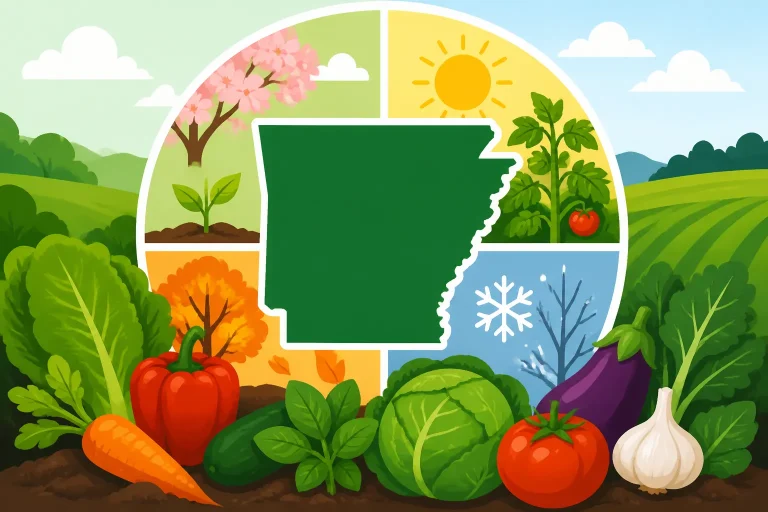
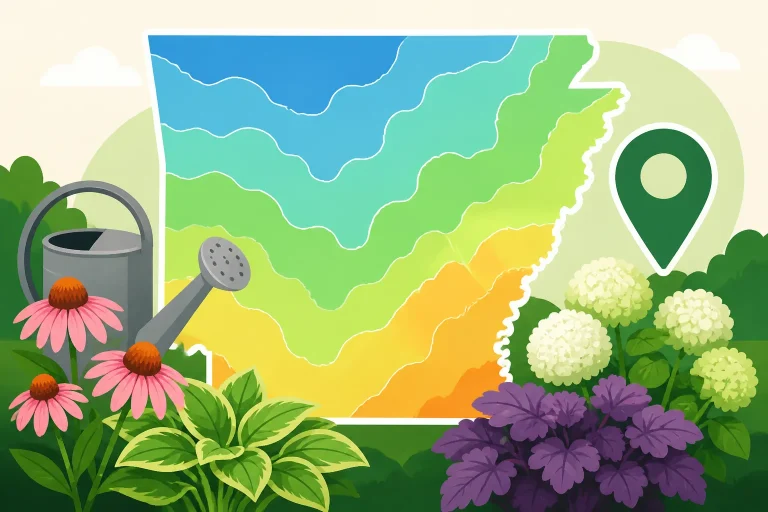
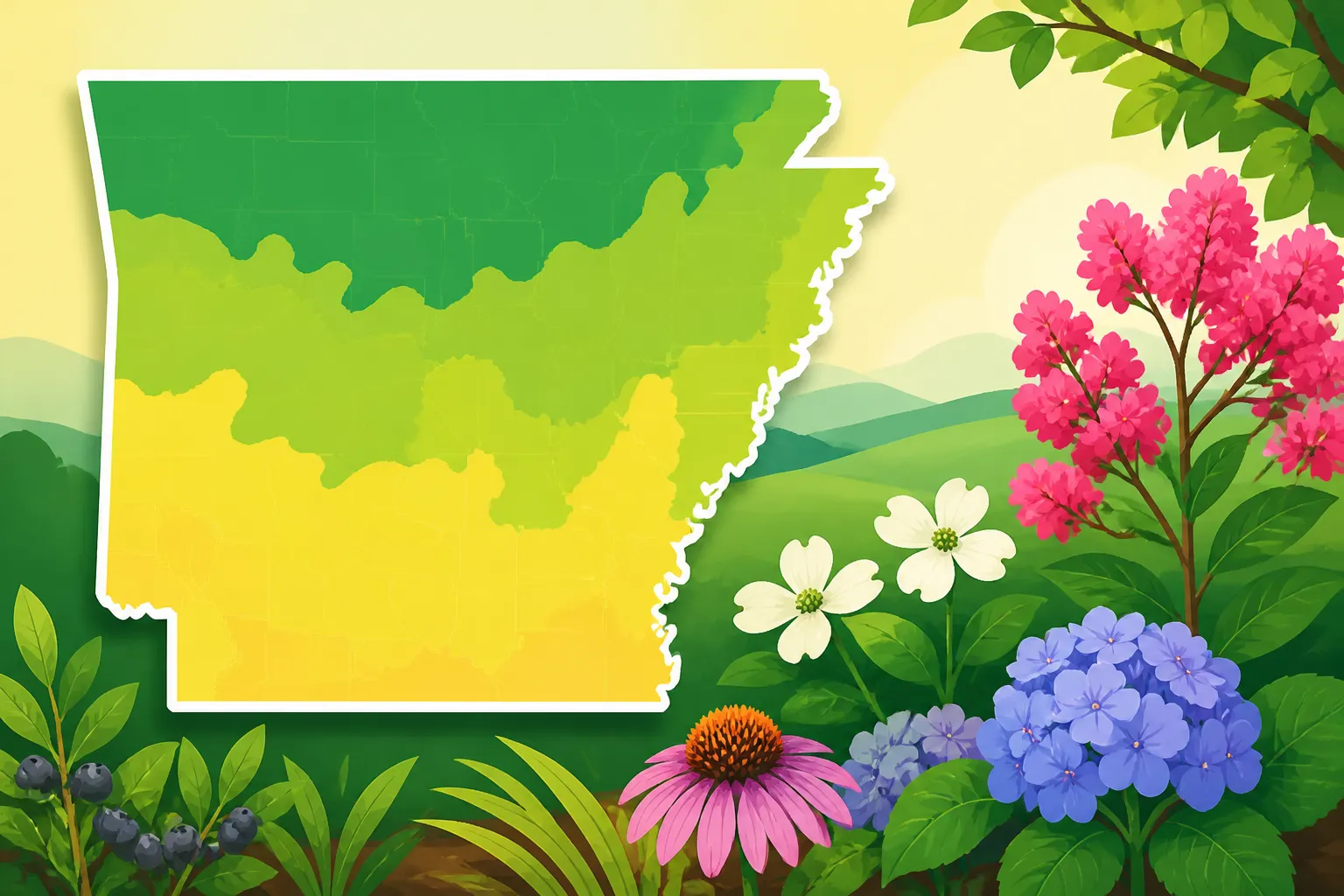
According to the University of Arkansas System Division of Agriculture Cooperative Extension Service, the USDA 2023 map places Arkansas in hardiness zones 7a to 8b. That range describes broad variation in winter cold conditions across the state. It is a starting point for evaluating whether a perennial plant may tolerate the cold of a location, not a promise that every plant labeled for a zone will thrive in every yard.
Hardiness zones are most useful when choosing plants that remain outdoors through winter, such as trees, shrubs, and many perennials. A plant label or reliable plant description may give a hardiness range. Comparing that range with the zone where your garden falls can help identify plants that are more likely to survive winter temperatures.
That comparison answers a limited question: how well might a plant withstand the coldest winter conditions represented by its hardiness rating? It does not account for every factor that affects survival. Soil drainage, sun exposure, wind, moisture, plant health, and the timing of temperature changes can all influence how a plant fares.
A plant that is technically suited to a zone may still struggle in a wet, exposed site or a spot where cold air settles. Conversely, a sheltered location may give a plant more protection than the surrounding landscape. Treat the map as a useful regional reference rather than a guarantee for an individual bed.
What the zone label does not tell you
A hardiness zone does not tell you when to sow seeds, set out warm-season transplants, or expect a spring freeze. It does not predict the weather in a particular season, either. A region’s winter profile may guide perennial selection, but the map cannot determine what conditions will occur in your garden on a particular night.
This distinction matters most for annual vegetables and flowers. Their planting windows depend on the conditions they need to germinate and grow, as well as the risk of cold at the beginning or end of the season. For those decisions, consult a crop-specific schedule, local freeze information, and the forecast. Can USDA Hardiness Zones Tell Arkansas Gardeners When to Plant? explains why the map alone cannot set vegetable planting dates.
The map also does not describe every feature of a yard. Differences in slope, shade, nearby buildings, pavement, wind exposure, and soil moisture can create pockets that behave differently from the broader area around them. A map can narrow the choices, but it cannot replace observing the conditions where you plan to plant.
How to interpret a zone range for a local garden
A statewide range means that Arkansas includes more than one broad hardiness classification. It should not be read as saying every location in the state has identical winter conditions, or that the whole state belongs to the warmest part of the range. Nor should a statewide description be used to assign a zone to a particular property.
For a useful local reference, check the USDA Plant Hardiness Zone Map with your location in mind. ZIP codes and map areas can help you find the zone that applies broadly to your vicinity, but the result is still a regional estimate rather than a measurement of your yard. The article Arkansas Plant Hardiness Zones: Finding Your Growing Zone by ZIP offers more context on using the map for a local search.
When comparing a plant’s rating with the map, use the information as a screening step. If a plant is outside the cold tolerance shown for your area, it may be a risky choice to leave outdoors through winter without protection. If the plant’s rating includes your area, it may be a reasonable candidate, but site conditions and care still matter.
Keep the plant’s needs alongside its zone rating. A tree that tolerates the winter cold may still need a sunny site, well-drained soil, or room to mature. A perennial suited to the area may not tolerate a wet bed. Matching winter tolerance without matching the plant’s light and soil preferences can lead to a poor result.
Look for patterns in your own yard
Gardeners can improve on a broad map reference by noticing how different parts of the property behave. A low spot may collect cold air, while a sheltered area near a building may be less exposed to wind. A sunny wall can warm quickly during the day, but that does not necessarily protect plants from a sudden cold night. These local patterns are useful context, not a substitute for a plant’s needs or weather information.
Pay attention to places where soil stays wet, where wind is funneled, or where shade lasts through much of the day. Those conditions affect plant health independently of the hardiness zone. A well-drained, sheltered location can be a better fit for a plant than a site with the same mapped zone but harsher exposure.
It can help to keep simple notes about what happens in different beds during cold snaps and seasonal transitions. Record which locations seem to stay colder, which dry slowly, and which receive the most sun. Over time, those observations can help you choose planting sites and interpret a regional map more thoughtfully.
If the property has steep slopes, a valley-like low area, or substantial changes in exposure, avoid assuming that a single map result captures every microclimate. Adjusting Arkansas Planting Dates by Local Elevation and Microclimate focuses on why local conditions can change how a garden behaves.
Use hardiness zones to choose long-lived plants
For trees, shrubs, and perennials, winter tolerance is one of several useful filters. Start by checking whether a plant’s stated hardiness range appears compatible with the area where you garden. Then assess its other needs: light, soil texture, drainage, moisture, mature size, and maintenance. A good match across these factors is more promising than a zone match alone.
| Gardening decision | How the hardiness map helps | What to check as well |
|---|---|---|
| Choosing a perennial | Helps screen for winter cold tolerance | Sun, soil, drainage, and moisture needs |
| Selecting a shrub or tree | Offers a broad reference for outdoor winter survival | Mature size, exposure, site drainage, and care |
| Planning a vegetable bed | Provides limited help with perennial crops or overwintering plants | Crop-specific planting guidance, soil conditions, and freeze risk |
| Protecting a container plant | Helps flag potential winter sensitivity | Container exposure, shelter, and the plant’s care requirements |
| Comparing two garden sites | Gives a regional baseline | Slope, shade, wind, nearby structures, and cold-air movement |
A plant’s ability to survive winter in the ground can differ from its ability to overwinter in a pot. The container exposes roots to conditions that may be harsher than those around a plant in the soil. If a plant is near the edge of its cold tolerance, consider how exposed the pot will be and what protection is appropriate for that plant. Do not assume that a favorable map classification makes an exposed container safe.
Newly planted specimens may also need attention while they establish. Good planting technique and suitable growing conditions support healthy roots, but they do not change a plant’s underlying cold tolerance. For trees and shrubs, site selection and ongoing care are part of the decision, not afterthoughts.
A zone range is also not a ranking of quality. A plant with a suitable rating is not automatically easier to grow than another plant, and the map does not indicate whether a plant is native, drought tolerant, disease resistant, or well suited to a particular garden style. Use other reliable plant information to evaluate those qualities.
For vegetables, the map is usually more useful as background than as a direct sowing instruction. Many vegetables are grown as annuals, so gardeners choose a seasonal window rather than a permanent outdoor location for winter survival. Some crops tolerate cool conditions better than others, while warm-season crops need suitable growing conditions before they are planted outdoors. Consult Arkansas Vegetable Planting Guide: Scheduling Crops by Local Freeze when planning a vegetable schedule.
If you are choosing a plant with a narrow cold-tolerance range, think about the cost of a failed planting in time and effort, not only the purchase. You might select a more cold-tolerant alternative, place the plant in a more protected area, or decide that seasonal protection is worth the work. Those are practical trade-offs that a map cannot make for you.
Why zones do not set planting dates
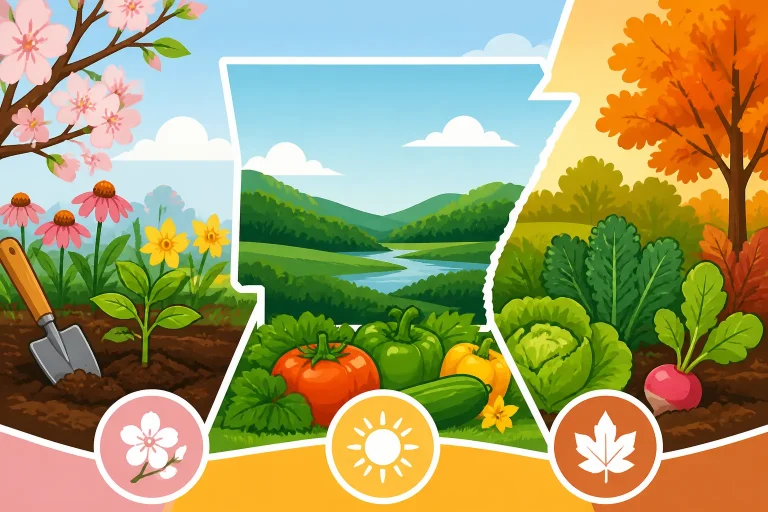
Vegetable planting dates are tied to seasonal conditions, not just winter survival. A crop may tolerate cool weather once established but still need particular soil and air conditions to germinate well. A tender crop can be damaged by cold even if its eventual summer growth is successful. The hardiness map does not say when those conditions will arrive in a given year.
Spring planting decisions involve risk. A warm spell can make a garden feel ready, but it does not ensure that cold weather is over. In fall, gardeners have to consider how much time a crop needs to mature before temperatures become unfavorable. These decisions depend on the crop, local timing, and the season’s weather.
For this reason, use crop-specific planting guidance and local freeze information rather than converting a zone label into a calendar date. Managing Seasonal Freeze Dates for Arkansas Vegetable Gardens covers the role of freeze timing in garden decisions. Using Spring Freeze Risk Percentages to Schedule Arkansas Planting discusses how probability can inform timing without turning a forecast into a guarantee.
A hardiness zone also cannot tell you whether the soil in your bed is ready to work. Soil that is too wet can be difficult to prepare and may be damaged by working it. Soil temperature and moisture can affect seed germination and root growth. Check your actual bed rather than relying on the map to describe it.
Separate winter survival from frost timing
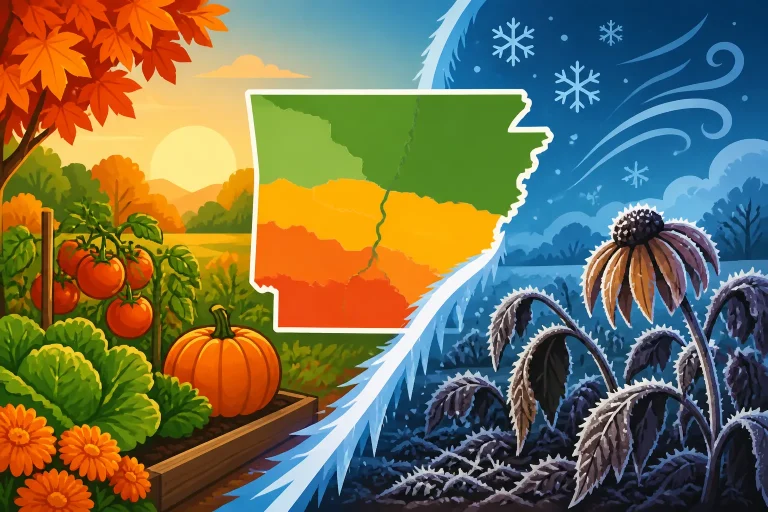
The distinction between a hard freeze and a light frost matters for many garden decisions. Different plants respond differently, and local exposure can affect what happens in a bed. A protected corner and an open low spot may not experience the same conditions at the same time. The zone map does not show those short-term differences.
That is why a planting calendar should be treated as a planning aid, not as a fixed promise. A regional calendar helps identify a sensible window, while observation and current weather conditions help refine the decision. If a cold event is forecast, use reliable local information to decide whether to delay planting or protect vulnerable plants.
For fall crops, the planning problem runs in the other direction: seedlings need suitable conditions to establish, but the crop also needs enough time to develop before cold limits growth. A plant’s hardiness rating may be relevant to whether it can remain in the garden later, but it does not tell you how quickly a particular crop will mature or whether it will reach harvest in time. Crop-specific advice is essential.
When to Plant Cool-Season Crops and Fall Greens in Arkansas and Planning Fall Gardens Across Arkansas Hardiness Zones can help connect seasonal decisions with local conditions. For the broader relationship between map classifications and frost dates, see Arkansas Freeze Dates by Zone: Average Spring and Fall Timing.
A practical way to use the map while planning
Use the map as one part of a decision process. Begin with the local zone shown for your area, then identify what kind of plant you are considering. A long-lived woody plant or perennial needs a different evaluation from a crop that will be grown and harvested within one season.
A practical sequence is:
- Check the plant’s stated cold-hardiness information and compare it with the map for your area.
- Review the plant’s light, soil, drainage, and moisture requirements.
- Look at the planting site for exposure, slope, shade, and places where cold air or water may collect.
- For vegetables and annual flowers, consult crop-specific timing guidance instead of using the zone as a sowing date.
- Before planting or protecting vulnerable plants, consider current local conditions and the forecast.
That process helps avoid two common mistakes: treating the zone as a guarantee of success, and treating it as a calendar. A zone can help you narrow the field of possible perennial choices. It cannot tell you whether a site is well drained, whether a crop should go into the ground now, or whether the coming night will bring damaging cold.
Keep your decisions flexible. If a plant is a borderline choice, you can reduce risk by selecting a more suitable site or choosing a plant with a broader cold tolerance. If the question is about vegetables, you can use a crop-specific schedule and wait for conditions that suit the crop. If the question is about a particular frost, rely on weather information rather than a map designed to describe broad winter patterns.
The map is still useful. It offers a shared reference for comparing plant descriptions and thinking about winter survival across a varied state. Used alongside local observations and planting guidance, it can make plant selection more informed without asking it to do a job it was not designed to do.
For a closer look at local cold tolerance, Checking Plant Cold Hardiness for Your Arkansas Zone explores how to compare plant requirements with your area. If your main concern is when to plant vegetables, How to Find Vegetable Planting Dates for Your Arkansas County is a more direct next step.
Frequently Asked Questions
Does the USDA map tell me when to plant vegetables?
No. The map is a broad reference for winter cold tolerance. Vegetable planting depends on the crop, seasonal conditions, local freeze risk, and guidance for the crop. Use a planting calendar rather than treating the zone as a sowing date.
Does a plant rated for my zone have to survive in my yard?
No. A suitable rating is a useful starting point, not a guarantee. Drainage, exposure, light, moisture, plant health, and local microclimates can affect how a plant performs.
Should I use the same zone for every part of my property?
Use the map as a regional reference, but do not assume every bed behaves identically. Slopes, low spots, buildings, shade, and wind exposure can create different conditions within the same yard.
Is a hardiness zone useful for annual flowers?
It may offer background about winter conditions, but it does not determine the best planting window for annual flowers. Use guidance for the plant and season, and consider local weather and frost risk.
Disclaimer
This article is for general informational purposes only and does not constitute professional advice. Laws, prices and regulations vary by location and change over time. Consult a qualified professional for guidance on your specific situation. Arkansas Gardening Guide is not a government agency and is not affiliated with any university extension, state department of agriculture or other government agency.